

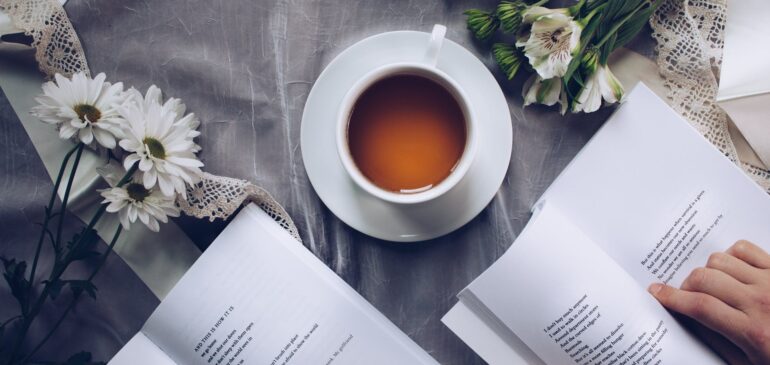
How I Make My Morning Tea
Anyone who knows me knows that I’m particular about how my tea is made. This has gotten bad enough that my friend has discovered she, too, now can tell the difference between burnt and oversteeped tea with a simple taste. So how do I make a perfect cup of tea, and why do I go through the steps I do? Let’s get into it!
Choose The Right Tea
The first step is, of course, choosing the right tea for the occasion. Out of the different kinds of tea, which is best for a morning cuppa?
Black Tea
Arguably my favorite kind of tea to drink. Specifically fond of Lord Bergamot at the moment from Steven Smith Teamaker. This tea comes from a few different regions, as it is a mix of a few different leaves, some of which come from the Indian Assam tea leaves, others from Sri Lanka. (You can read about it more here.) Most black teas have that strong punch, that I think is perfect for waking up to and getting a start on the day. (This includes the occasional morning chai, which comes with its own kind of “morning punch,” but can be equally good on those chilly, rainy mornings.)
Green Tea
Green tea is a favorite in Japan, and while I do love select greens, I must say that my palette for them is not as well-developed. I do particularly love gunpowder (how can you not when the leaves are rolled up like that?), dragonwell, and a few others. But as far as morning teas go, I would say these are best saved for relaxing after work, or helping you distress. Their calming flavor is best enjoyed when you actually have time to be calm, instead of rushing to get to work in the morning.
White Tea
A light, delicious genre of tea, paired rather well with different flavors. I am fond of my jasmine white tea, which pairs two teas together for a delightfully light tea. That said, I do believe this is a good tea for writing with and not for waking up to. While the fruity flavors can be nice and enjoyable, I find it is once again too calming for my taste in the morning.
Herbal Tea
I must quickly clarify something: herbal tea, such as those offered by Celestial Seasonings, is not true “tea.” While I still enjoy herbal teas in their right place (I usually drink them before bed to help me relax, such as peppermint or chamomile tea), “tea” as we know it is made specifically from the Camellia Sinensis plant. Since these plants do not naturally grow within the United States, Celestial Seasonings picked up the name “tea” to help sell their product when they were first starting out. This has created a misconception in the more Western world that tea is something you steep, but it is in fact from a specific plant.
Long spiel aside, herbal teas I generally drink to go to bed, so drinking them in the morning does nothing but make me more drowsy. Good for those “I woke up five hours before I need to and want to go to sleep” sort of nights, though.
Choose The Right Water
If I haven’t sounded pretentious and absolutely ridiculous about tea yet, I’m about to. Water is extremely important for the making of tea. Tea is best made with recently poured water (from your faucet or otherwise) so that it keeps its oxidation. Additionally, the more filtered you can get it, the more pure the tea will be. It is abundantly clear (at least, to me) when you are served a tea where the water tasted too strongly of iron. The iron flavor will come through and completely dominate the flavors of the tea, making for a less than enjoyable experience.
For me, I use my brita filter after taking the water from my well, and use that to brew tea. While it’s not perfect (it could definitely be filtered better), it helps ensure there’s no unnecessary flavors in my tea other than that of the leaves themselves. So if you can, try to get some clean water for the best tasting tea.
Choose The Right Kettle
There’s a ton of different kettles on the market. I know, because I have a bunch of them. If you are richer than I, I’d recommend picking up a yixing kettle, as the soft clay it is made out of absorbs the flavors of the tea you brew inside it, enhancing the flavors over time. (Do note that these kettles are made to withstand boiling the water, but they are great for brewing the tea and serving the tea out of.) However, for those of us with more meager means, getting a kettle with a temperature gauge is imperative. Without it, you will not make the same cup of tea each time, and you will find it difficult to ensure your tea is not overboiled / burnt. (I’ll get into that more below.) For me, I have a small steel kettle gifted to me by my aunt. It’s seen a lot of use in the last few years and has started to leak ever so slightly from the spout. But as they say – good kettles have leaks. No good kettle is perfect.
Choose The Right Temperature
After water, temperature is imperative. Each tea demands different temperatures and different levels of care. For those not in the know, it is extremely possible to burn your tea (most United States tea served in restaurants and cafes is burnt). Burning your tea is dictated by getting the water too hot and pouring that over the leaves, thus burning them and soiling the flavor. An easy way to avoid this is to monitor your temperature closely when making tea to ensure you get the best drink you can.
Black Tea
For black tea, I tend to get the water to 85 degrees Celsius. This seems to give me the perfect balance of well-steeped tea without burning it, bringing out the flavors wonderfully strong without ruining them.
Green Tea
I tend to brew green tea close to 80 degrees Celsius, as the green leaves are more sensitive to the water and do not need a full boil to brew.
White Tea
I have read in all my tea brewing books (yes, those exist, and I am one of the nerds that owns several) that white tea should be brewed hotter than black tea. Via my own experimentation, I’ve found this to be true. White tea is harvest in a short time frame, where the Camellia Sinensis leaves grow a white fuzz over them. Tea made from this leaf tends to require more heat to properly pull out the flavors. For this tea, I brew it at about 90 to 95 degrees Celsius.
Herbal Tea
As with green tea, herbal tea I brew at 80 degrees Celsius.
Choose The Right Time
Brewing time is right up there in importance as heat. Perhaps a tad less important, if we’re tiering the importances here. If you succeed in ensuring your tea is not burnt, you’d best take heed not to oversteep it. Oversteeping tea can give it a strong bitter flavor, ruining it. Black tea is particularly susceptible to this. Time your teas properly to make sure you get a perfect cuppa.
Black Tea
I tend to steep these for anywhere between 3 and 5 minutes, depending on how strong I want the tea to be.
Green Tea
Green tea requires more time to steep. Steep these at about 5 to 6 minutes, or longer if you’re feeling particularly bold.
White Tea
I brew these at about five minutes, as the flavor is light, and I tend to want to bring it out more.
Herbal Tea
Like green tea, I brew these anywhere between 5 to 8 minutes, depending on the herbs used to make the mix. Some herbs require longer to steep, so check your packaging and do your own experimentation.
Choose The Right Additives
This is a trick step. For me, I deeply dislike anything added to my tea, be that milk, honey, sugar, or anything else. This comes with a few caveats, as my aunt can make a stellar black tea with milk that I do actually enjoy; I do like my chai mixes (Bhakti Chai is quite good) with milk; and I can come to enjoy a select few iced teas (usually homemade). Other than that, I avoid adding anything to my tea, as I prefer to taste it in its fullness. Besides, if you make your tea right, usually it’s pretty good!
That’s my little tea-brewing guide for you all! I am by no means an expert, this is just what I’ve found works for me. How do you like your tea? Let me know in the comments! <3